
Composition & Use
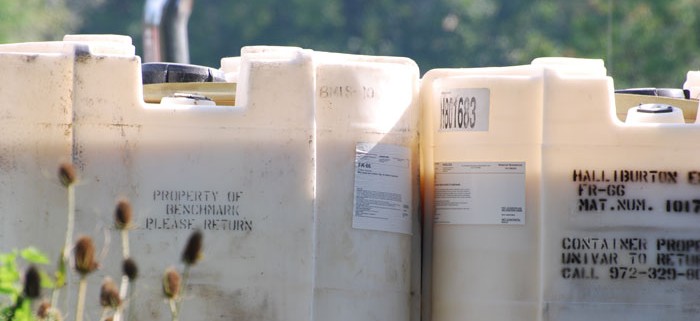
Fracking fluid (or frac fluid) is a chemical mixture used in drilling operations to increase the quantity of hydrocarbons that can be extracted. The fluid prevents corrosion of the well. It also lubricates the extraction process, and prevents clogs and bacterial growth, among other functions.
Fracking fluids fall within such cryptic catagories as carrier/basefluid, biocides, scale inhibitors, solvents, friction reducers, additives, corrosion inhibitors, and non-ionic surfactants – which is a catch-all category for dozens of fluids like Naphthenic Acidethoxylate or Poly (Oxy-1,2-Ethanediyl), Alpha-(4-Nonylphenyl)- Omega-Hydroxy-, Branched.
In short, the chemical mixture is complex, varies from well to well, and many of these compounds, depending on the level of exposure, pose serious health risks.
The oil and gas industry approximates that the chemical additives make up only 1% of the fluid injected into a bore hole for use in hydraulic fracturing. However, it’s important to remember that 1% of 5 million gallons (approximate amount of total fluid injected) means that 50,000 gallons of chemicals in the fracturing fluid are used for a single unconventional stimulation job. For example, some Ohio Utica wells have been shown to use 25,000-27,000 gallons of petroleum distillate, 6,000 gallons of surfactant, and 9,000-31,000 gallons of gelling agent (various fracking chemicals and additives).
Regulation
Under the Bush Administration, Vice President Dick Cheney helped to pass the Energy Policy Act of 2005, which exempts hydraulic fracturing from federal oversight under the Safe Drinking Water Act of 1974. This gap in the regulation is often referred to as the Halliburton loophole. With such an exemption, companies are not required by the federal government to disclose the chemicals being used in their frac fluid. Some companies are choosing voluntarily to disclose that information, and a few states also require such disclosure for oversight purposes.
Learn more about the Halliburton Loophole, and the EPA regulations on hydraulic fracturing.
Available Data
Currently, there is not one publicly available and comprehensive dataset on frac fluid use and composition in the U.S. Well-by-well chemical use data can be found in PDF form on FracFocus.org, but those datasets exclude proprietary chemicals (trade secrets) and are not available in aggregate. The EPA website also lists possible chemicals used in frac fluid. Those datasets, however, are not specific to any particular well site.